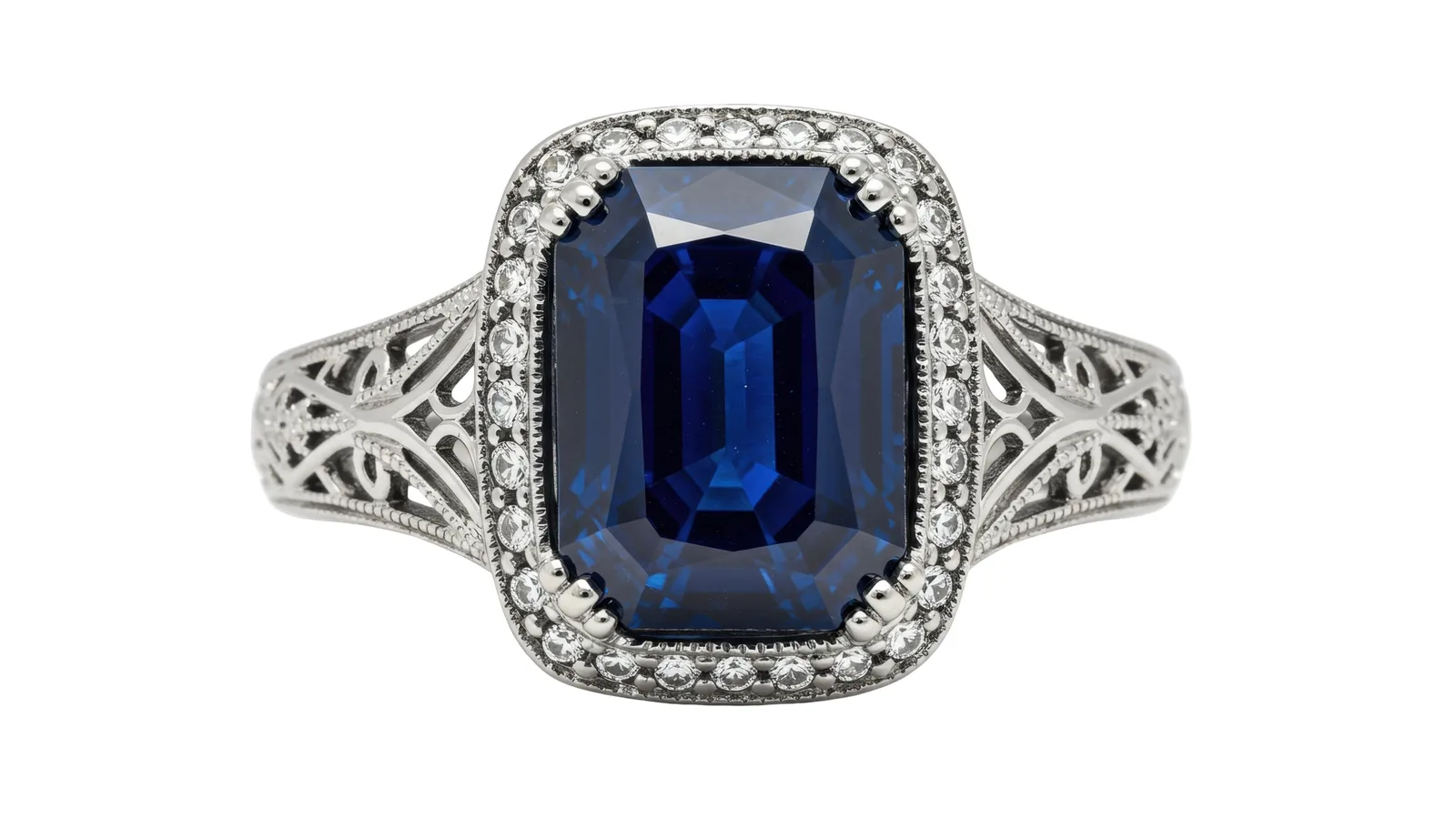
An antique sapphire can be one of the most rewarding pieces to own, but not every ring sold as antique is what it claims to be. Before buying, insuring or selling a piece, three questions need answering: is the stone genuinely sapphire, is the setting genuinely old, and do the two belong together. This guide explains how origin, cut and hallmarks help answer each one.
Where antique sapphires came from
Most antique sapphires trace back to one of three sources, and the differences between them are not subtle. Kashmir stones, mined briefly in the 1880s, show a soft, velvety cornflower blue from fine silk inclusions, and the source is now essentially exhausted. Burma’s Mogok Valley stones run deeper and more saturated. Ceylon sapphires, mined for over two thousand years, cover the widest colour range and appear across almost every antique period from the Georgian era onward. Origin will not date a piece on its own, but it narrows the field before you turn to cut and setting.
Cuts and settings that date a sapphire by era
Cutting technique followed the tools and tastes of its period, which makes it a reliable dating clue in its own right.
| Era | Approximate Dates | Typical Cut | Setting Detail |
| Georgian | 1714 to 1837 | Rose cut, table cut | Closed back, foil backed |
| Victorian | 1837 to 1901 | Old mine cut, cushion cut | Ornate gold, high collets |
| Edwardian | 1901 to 1910 | Old European cut, calibré accents | Platinum, milgrain, filigree |
| Art Deco | 1920s to 1930s | Step cut, emerald cut | Geometric, calibré lines |
Georgian work also used sugarloaf cabochons and mixed cuts. A cutting style that does not fit its mount, such as a modern brilliant cut in a supposedly Georgian setting, is a mismatch worth investigating.
What an antique hallmark tells you
A hallmark is the most precise dating tool, applied by an assay office at a known point in time. Hallmarking became a legal standard in 1300, under a statute of Edward I documented by the Goldsmiths’ Company, though the date letter system used to find the exact year of assay only began in 1478 at Goldsmiths’ Hall. Town marks vary by office: a leopard’s head for London, an anchor for Birmingham, a rose or crown for Sheffield, a castle for Edinburgh. Read the date letter against a published table. The absence of a mark does not by itself mean a piece is not genuine, since hallmarking was never applied universally.
Is the sapphire real, and is the piece genuinely old?
These are not the same question, and treating them as one is where most guidance on this subject goes wrong.
Start by looking inside the stone. A loupe reveals natural inclusions such as fine silk or colour zoning, while curved striae, gas bubbles or a glass-like clarity point to a synthetic or glass instead. Genuinely antique sapphires are also less likely, though never guaranteed, to have been heat treated, since widespread commercial heat treatment is a relatively modern practice, a shift traced in the history of sapphire heat treatment.
Whether the setting is old comes down to construction: hand-fabrication tool marks that a modern cast setting will not show, closed-back settings where the period calls for them, and wear consistent with decades of handling.
One case can pass both checks separately: a genuinely old, correctly hallmarked setting with its original stone swapped for a modern one. Checking whether the stone’s wear and cut match the setting’s age is what reveals it.
What to check before you buy, insure or sell
Start with documentation. A laboratory report from GIA or a European specialist such as SSEF or Gübelin should confirm whether the stone is natural, whether it has been treated, and ideally its origin. In the UK, Gem-A is the professional body to know.
Provenance such as a family record or the original retailer’s box adds real confidence. Check the setting’s condition too, since antique claws and shanks can be fragile, and resizing an old ring risks cracking a period setting. An independent valuation, taken before you insure or sell your jewellery, separates real resale value from a higher insurance figure.
FAQs
What if the hallmark on an antique sapphire ring cannot be read?
A worn or illegible mark does not rule a piece out. Match what remains, a partial letter shape or shield outline, against the construction and wear elsewhere on the piece, and have it examined under magnification by someone who reads hallmarks professionally. Hallmarking was never applied universally, so a genuinely old setting can carry no legible mark and still be exactly what it claims to be.
Is my antique sapphire ring worth anything, and what should I do before selling it?
There is no single figure to quote, since value depends on the sapphire’s origin and treatment history as much as the setting’s period, condition and maker. A Georgian rose cut sapphire in a fragile closed-back setting and a well-preserved Edwardian piece with a certified unheated stone can sit worlds apart in price, even at a similar carat weight. Before selling, have the piece independently valued rather than relying on an online estimate.
Every piece in our collection has already passed this checklist
As a third-generation family jeweller in Hatton Garden, we assess every sapphire in person before it joins our collection, checking the stone, the setting and the match between them against the framework above. Browse the antique and vintage jewellery collection, or bring a piece into the showroom to be assessed.
Sidebar CTA question (for WP sidebar widget): Already own an antique sapphire piece and want to know what it is worth? Our jewellery valuation service can tell you.