Buying an antique engagement ring means paying for the right things, the stone and the craftsmanship, not the word “antique” on the ticket. This guide covers what actually sets the price, how to choose a stone and setting, how to resize an older ring safely, and how to buy with confidence.
Why Choose an Antique Engagement Ring
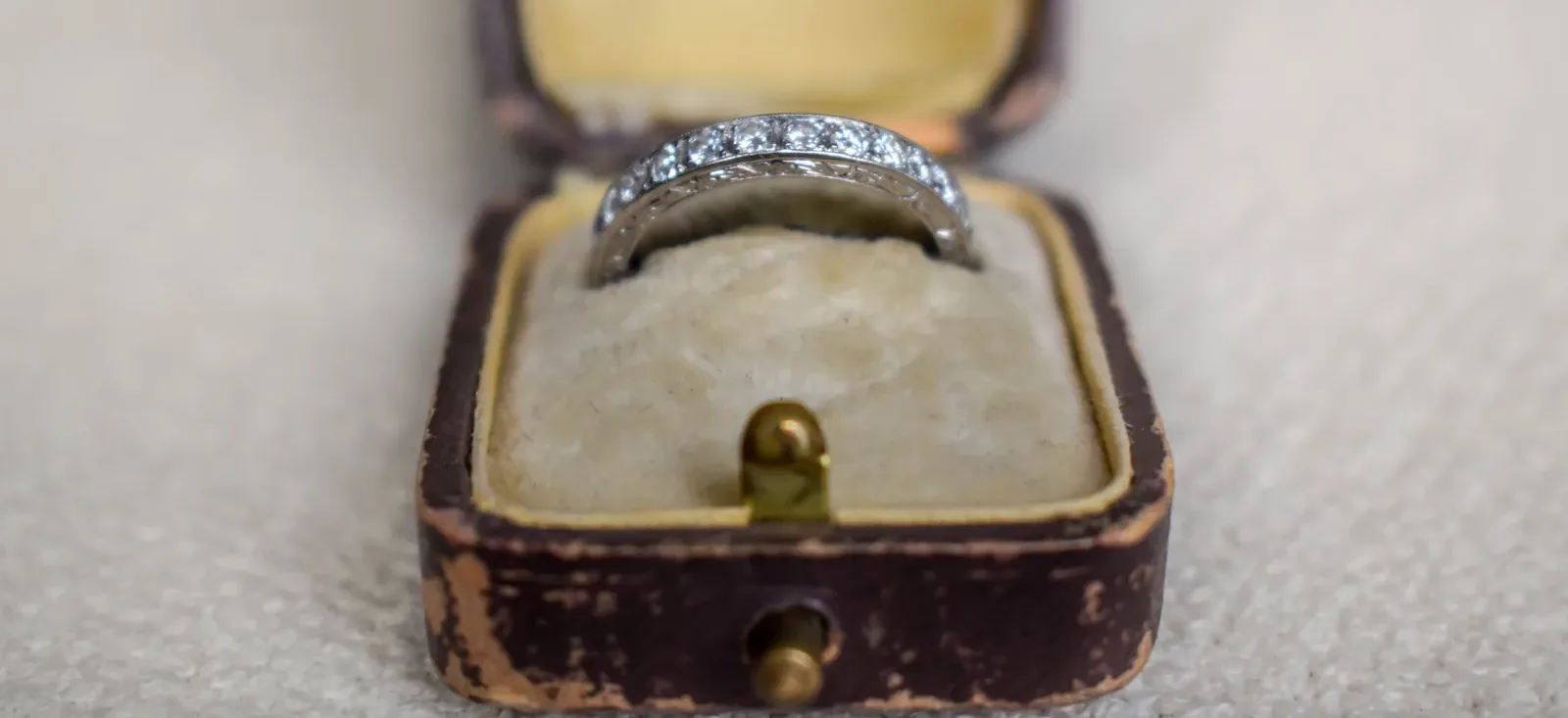
Old European, old mine and rose cut diamonds are among the most sought-after antique cuts. A hand-cut stone from before the era of laser precision carries a warmth a modern round brilliant does not replicate.
A genuinely antique ring shows small irregularities: slight asymmetry across the facets, hand-finished metalwork, hallmarks matching the claimed era. Too-perfect symmetry or a mismatched hallmark is usually what gives a reproduction away.
What Actually Drives the Price
Condition sets the price, not the category. Two similar rings from the same period can carry very different prices: a secure setting, an intact shank and no repair history cost more than a ring that needs work, whatever era it comes from.
Ask Before You Agree the Price, Not After
Re-tipping rebuilds worn prongs. Re-shanking replaces part or all of a band thinned by age. Both are normal on a ring this old, and what matters is when the work happens and who pays for it.
If a jeweller says a ring needs either before daily wear, raise it before you agree a price. A good jeweller will name the work and say when it is needed, rather than keep steering the conversation back to the stone.
Our own 14-day return period does not cover a ring once altered or resized, which is exactly why this conversation happens before you commit.
Choosing a Stone and Setting for Everyday Wear
An antique ring worn daily needs to survive decades of knocks, not just look right under shop lighting.
| Stone | Mohs hardness |
| Diamond, sapphire, ruby | Hard enough for daily wear |
| Emerald | Durable, but benefits from a protective setting |
| Opal, pearl, softer coloured stones | Better suited to occasional wear |
Wear often thins the prongs holding an antique stone, so the setting matters as much as the stone. A bezel, a rim of metal around the edge, gives more day-to-day security than raised claws, including on delicate filigree or milgrain settings. Stone quality itself is judged against cut, colour, clarity and carat.
Resizing an Older Ring Safely
A hallmark sits stamped inside the shank, exactly where a jeweller cuts or adds metal during a resize, making it the first casualty of a careless job. Ask whether the work can be done without cutting through the hallmarked section.
Costs and turnaround both vary by metal and by how much the size changes. Older, hand-fabricated shanks can need a specialist’s assessment rather than a standard resize, and only a jeweller who has examined the ring in person can give an accurate quote.
Buying With Confidence: Certification and Trust
Most genuinely antique stones predate independent grading labs, so a ring with no certificate is normal. A reputable seller should instead explain why they believe a stone and setting are period-correct, and how that can be checked without a certificate.
Beyond the ring, look for membership of a recognised trade body:
- NAJ, the National Association of Jewellers, for jewellers generally
- LAPADA, the Association of Art & Antique Dealers, for specialist antique dealers
- BADA, the British Antique Dealers’ Association
Watch for two kinds of warning sign together. A knife-edge shank or a rattling stone is a physical problem you can see. Vague talk about the era, or a reluctance to discuss repairs, is a behavioural one. Either on its own need not end the conversation, but the two together usually should.
As a third-generation, family-run specialist trading since 2006, we hold every ring in our showroom to this standard.
See Antique Engagement Rings at Our Hatton Garden Showroom
Every piece in our collection is individually selected, assessed and authenticated before it reaches the showroom on Greville Street. Visitors are welcome to browse the antique engagement ring collection in person.
Frequently Asked Questions
Is an antique ring cheaper than buying new, or a false economy once repairs are factored in?
Neither is reliably true. An antique ring usually costs less upfront, since you are not paying for new manufacture, though that gap can narrow once any repair is priced in. Buy on the condition of the individual ring rather than the assumption that older is automatically cheaper.
How do I get an antique ring valued or insured with no original receipt?
A receipt was never the requirement. An independent valuation from a qualified appraiser is what insurers ask for, and many will insure a genuinely antique piece at its replacement cost today, often higher than the purchase price. Our in-house valuation service provides exactly that.
Examine the ring closely and ask the awkward questions. A seller who welcomes that is the one to buy from.